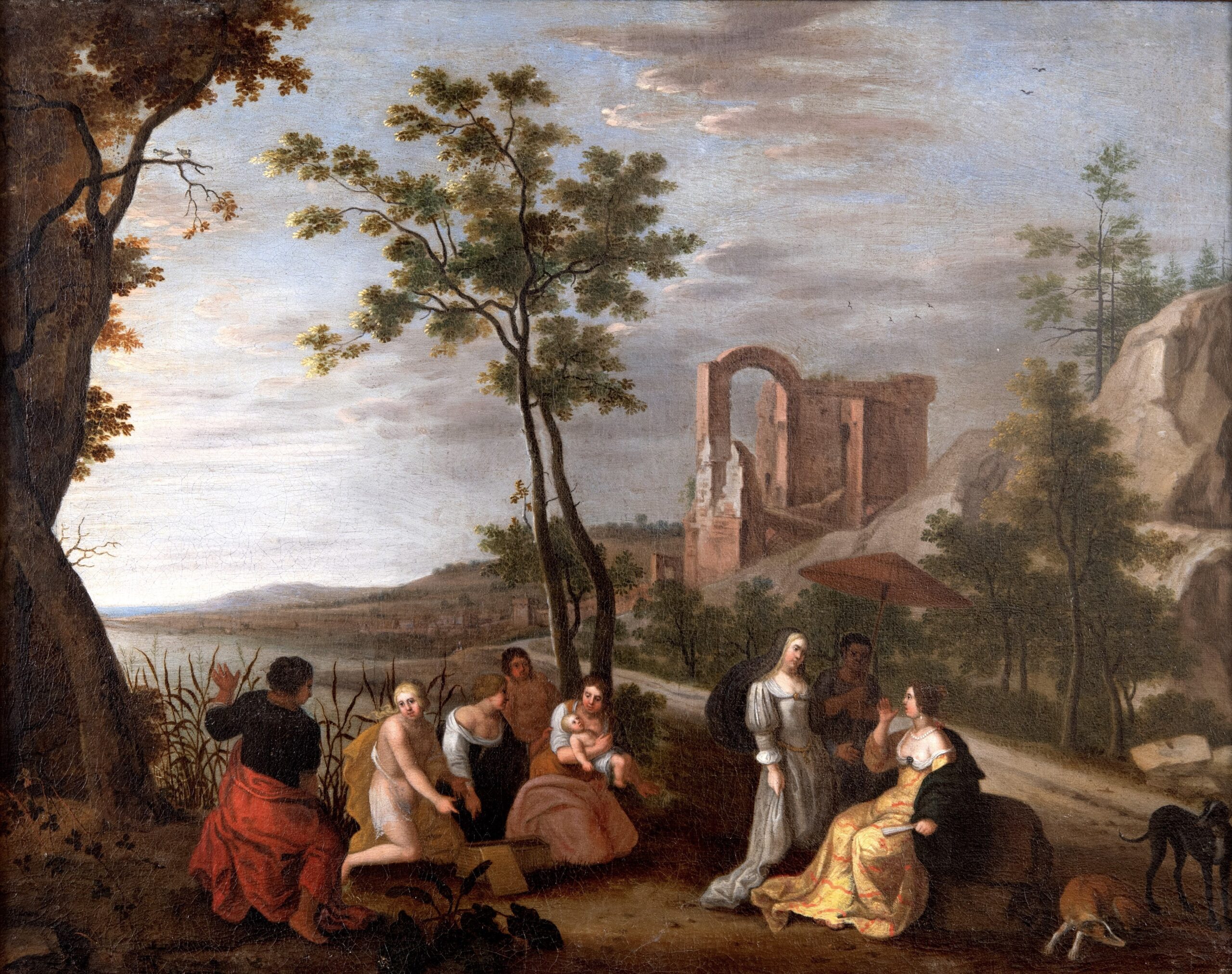
And the daughter of Pharaoh came down to wash herself at the river; and her maidens walked along by the river’s side; and when she saw the ark among the flags, she sent her maid to fetch it. And when she had opened it, she saw the child: and, behold, the babe wept. And she had compassion on him, and said, This is one of the Hebrews’ children. Then said his sister to Pharaoh’s daughter, Shall I go and call to thee a nurse of the Hebrew women, that she may nurse the child for thee? And Pharaoh’s daughter said to her, Go. And the maid went and called the child’s mother. And Pharaoh’s daughter said unto her, Take this child away, and nurse it for me, and I will give thee thy wages. And the women took the child, and nursed it. And the child grew, and she brought him unto Pharaoh’s daughter, and he became her son. And she called his name Moses: and she said, Because I drew him out of the water.
Exodus 2:5-10
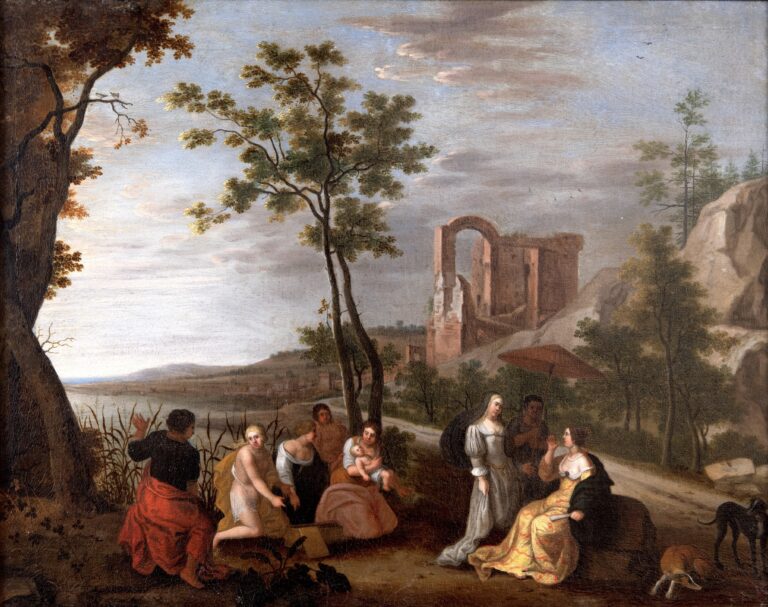
Our painting tells one of the great origin stories of the Bible, and a critical moment in the history of the Jewish people: the rescue of the infant Moses by Pharaoh’s daughter from the waters of the Nile. In finding Moses, she saves the life of the man who will lead the Jews away from enslavement at the hands of her father and, ultimately, to the edge of the Promised Land.
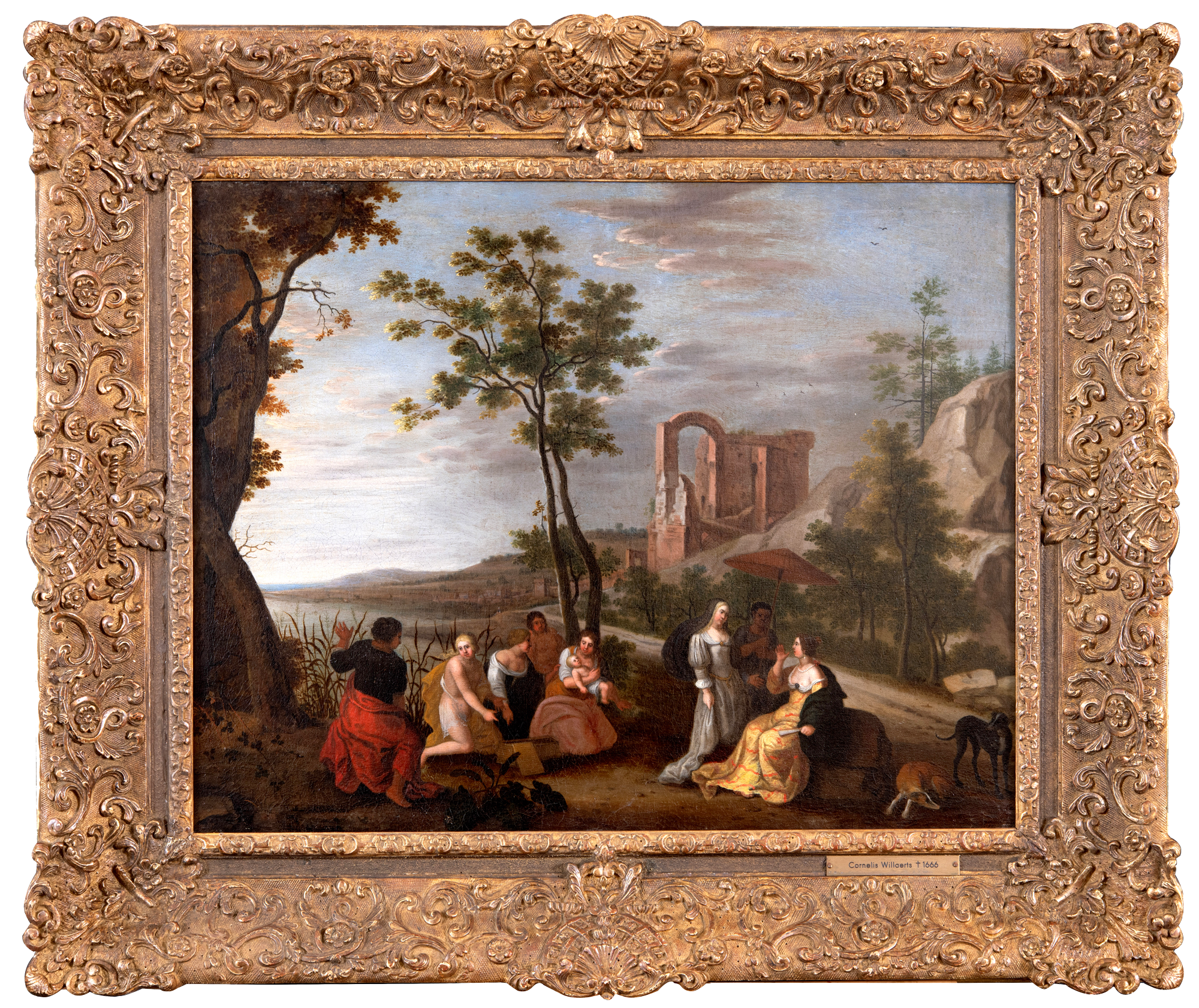
Our signed painting is by Dutch Golden Age painter Cornelis Adamsz. Willaerts (1600-1666), who was almost an exact contemporary of Rembrandt (1606 – 1669). Willaerts was known for his paintings of biblical and mythological subjects; a drawing of his is in the collection of the National Gallery in Washington, DC. Our Willaerts is set within an ornamental frame fitting for the majesty of the origin story of Moses.
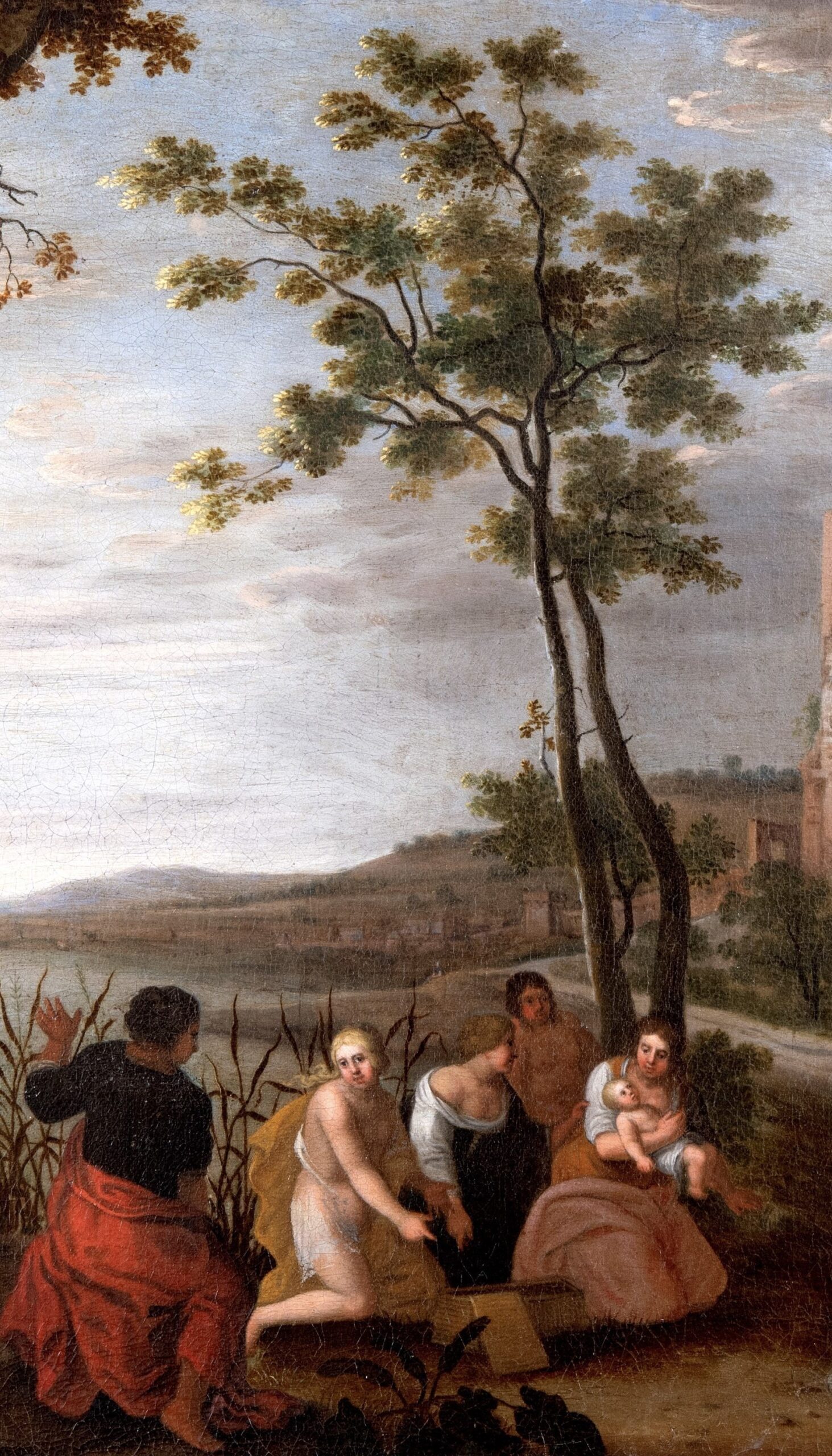
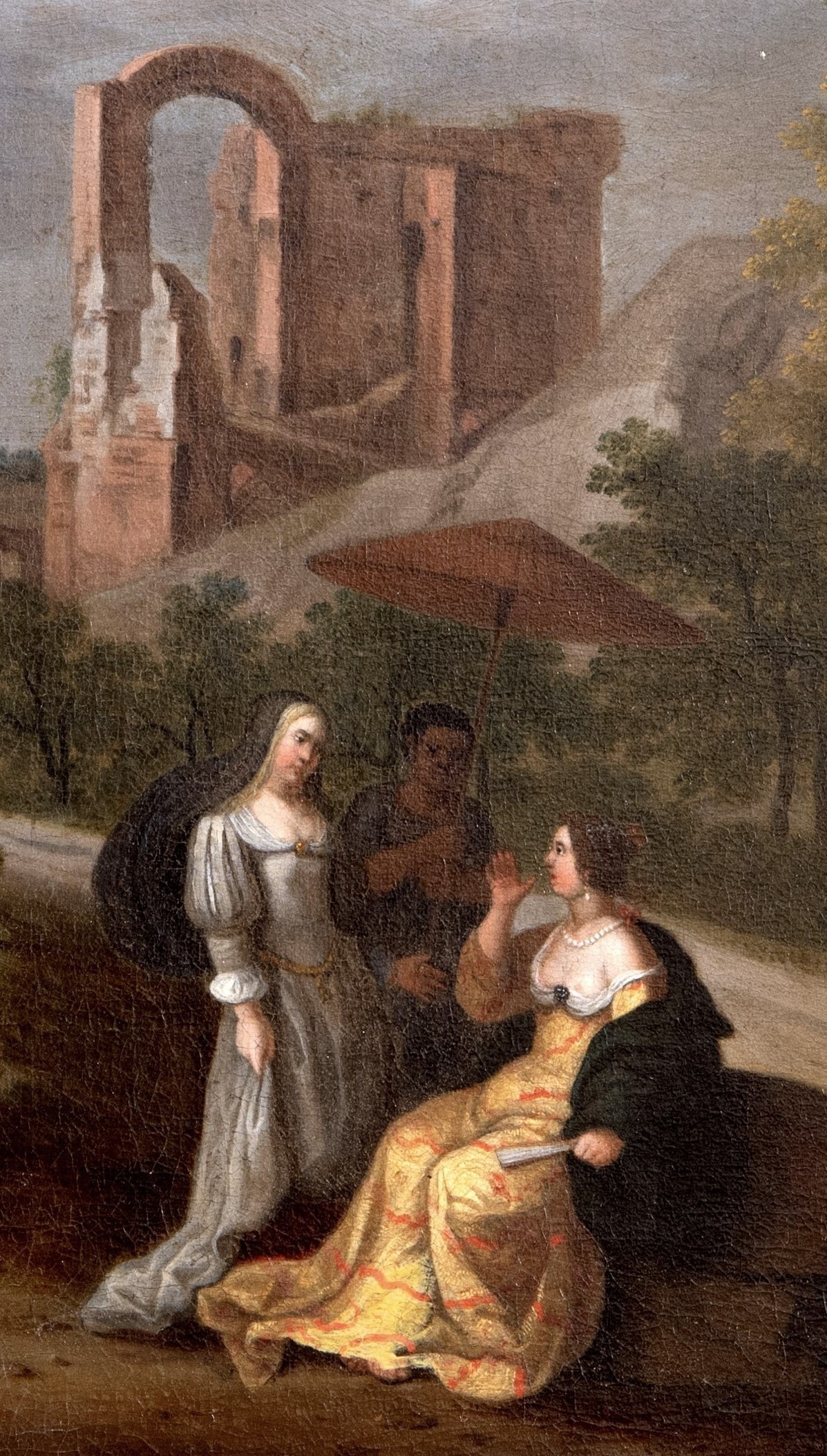
All the key elements of the story are to be found in our painting: on the right Pharaoh’s daughter, finely dressed, bejewelled and shielded from the sun by an umbrella held by a manservant; to the left, her maidservants, modestly dressed and full of surprise at what they have found, one of them cradling an infant, who looks up at her with a flushed face (an indication of his weeping as described in Exodus). On the ground we see the “ark of bulrushes” fashioned by Moses’ mother. Here the artist has taken license in painting what looks like an elaborate woven basket, with multiple flaps: more what a 17th Century Dutch Lady would have for a picnic than something woven by hand 3000 years before.
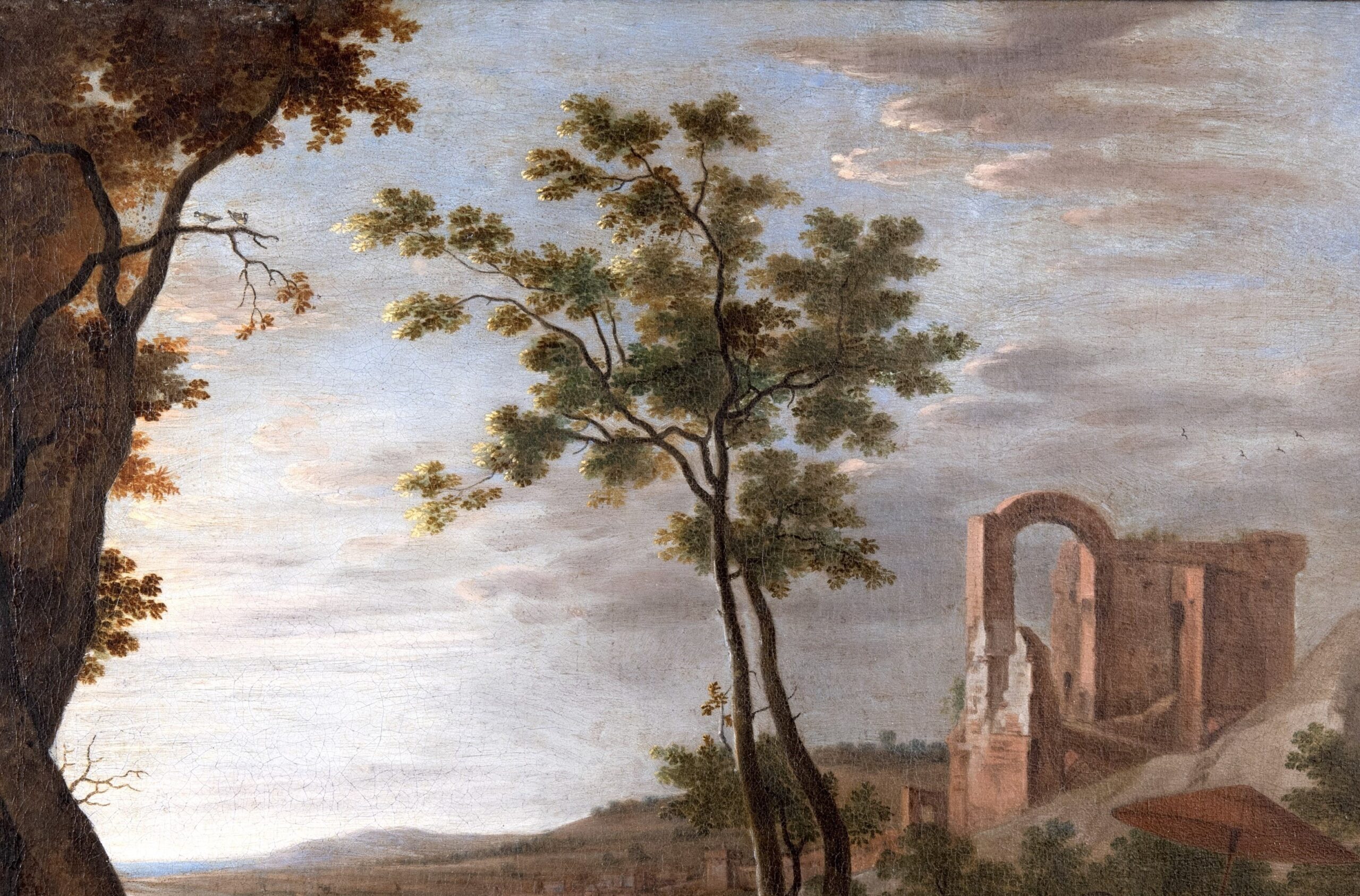
The party is framed by trees right and left, with one two-trunked tree in the centre, seemingly growing out of Moses, symbolising a new birth of the Jewish people. Above the Pharaoh’s daughter is a ruined structure, connecting her to Egypt and the past (in contrast to Moses, who is the future). The scene is completed by the Nile itself, which flows calmly into the distance, having delivered Moses safely to his destiny.
Provenance: Sir Harvey, London 28 January 1916, lot 57. Sotheby’s, London, Auction of the estate of the Countess of Craven, January 15, 1969, lot 120. Nadeau’s Auction Gallery, Inc., Windsor, Connecticut, Annual New Years Day Auction, January 1, 2019, lot 380. A Newport, Rhode Island, estate until 2024.